Reflections on Gender: Insights from 'India through Bollywood
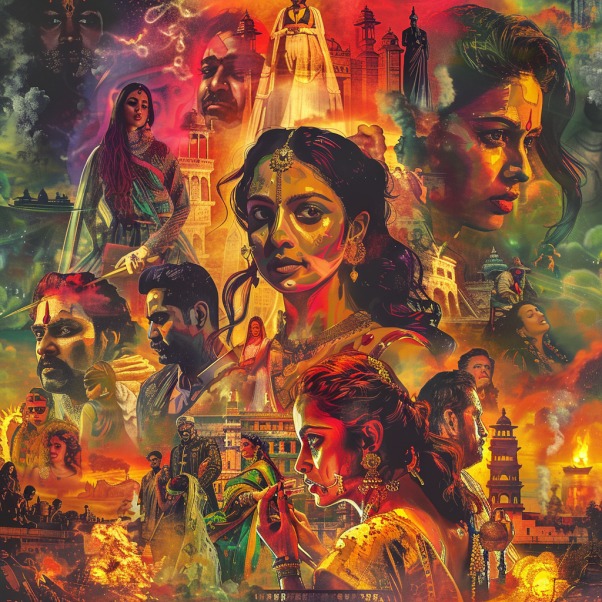
I signed up for this course on Indian through “Bollywood” with a simple idea in mind -- to learn something new. But what I found was a journey through the soul of India, guided by the lens of its cinema. It’s been an eye-opener like walking into a room where the light suddenly flicks on, illuminating corners of the room you never noticed before.
Bollywood and Indian Society: This part of the course highlighted the ways in which Bollywood films reflect degrees of Indian life—both good and bad. Films like Padman (2022), Darlings (2022), and even the cross-cultural hit Bend it Like Beckham (2006), though not a Bollywood film in the strictest sense, share a connection—they all challenge and redefine traditional notions of masculinity and femininity within Indian society.
Padman is inspired by the life of Arunachalam Muruganantham. The film challenges the taboos surrounding menstrual hygiene in India—a subject traditionally seen as a woman's problem (hence why it is not often talked about in a male-dominated society). What stood out to me the most was Lakshmi’s journey, not just in creating a low-cost sanitary pad but in breaking down the barriers of what men can and cannot talk about. In Indian society, masculinity is often associated with traits like strength, dominance and stoicism, while issues related to women's health and hygiene are considered taboo and relegated to the domain of women.
However, the film presents Lakshmi as a compassionate and empathetic individual who not only acknowledges but actively works to address these issues. The film depicts Lakshmi's struggle against societal norms, economic constraints and even ridicule from his own community. His journey and determination were symbolic of a larger societal shift towards addressing embedded taboos and inequalities. His efforts to break down these barriers demonstrate that empathy and support for women's health are important aspects of masculinity.
Then there's Darlings, a darker, more complex film that delves into domestic abuse and the resilience of women in the face of patriarchal violence. It's a film that doesn't shy away from the dark realities many women faces, however, it's the portrayal of masculinity here that's interesting. The male characters are not just villains or heroes; they are a reflection of societal norms and the expectations placed upon men. In Indian society, there is often immense pressure on men to fulfill the traditional role of breadwinner and when faced with limited opportunities for success this pressure can manifest in toxic ways.
Hamza’s resentment and feelings of failure come from his dissatisfaction with his job and his desire to be respectable, which lead him to lash out at his wife. He may perceive her as a convenient target for his frustrations, especially if he feels emasculated by his inability to provide adequately for his family. This dynamic challenges traditional expectations of masculinity as it highlights the harmful consequences of societal pressure to conform to rigid gender roles. Darlings (2022) also challenges traditional expectations of women in Indian society. Despite facing domestic abuse, both Badru and her mother demonstrate resilience and courage, refusing to be defined solely by their roles as wives and mothers. This portrayal subverts the stereotype of the passive, submissive Indian woman and emphasizes the importance of women's empowerment and autonomy. The film also touches on the presence of bystander apathy and societal indifference to issues of domestic abuse. The women in the salon beneath the Badru's house hear the abuse taking place but make no real efforts to intervene or offer support. This indifference reflects a cultural tendency to ignore or dismiss issues of gender-based violence, brushing them off as just "the way things are." This societal complacency in India perpetuates cycles of abuse and allows harmful norms to persist unchallenged. Overall, the film subtly critiques these norms, urging viewers to question and dismantle the toxic structures that uphold them.
Bend it Like Beckham, while primarily a British film, resonates deeply with the Indian diaspora and its intersection with Western cultures. The struggle of Jess, a young Indian girl in London with a love for soccer who goes against the expectations of her traditional Sikh family, is a story of rebellion against gender norms. But it's also a story about the men in her life—her father and coach, who, each in their way, challenge and adhere to these norms providing a multilayered look at masculinity within and outside the diaspora.
These films, through their storytelling, characters, and subtext, offer a window into Indian society -- reflecting both its flaws and its potential for change. They encourage a conversation around what it means to be a man or a woman in today's world, challenging us to think beyond the binary and embrace a more inclusive understanding of gender.
As I reflect on the films I’ve watched throughout the course, I'm struck by the power of cinema to influence societal perceptions and inspire change. Bollywood, with its global reach and cultural impact has a unique opportunity to lead this conversation, breaking down barriers and redefining norms. Through these films and the conversations, they spark, we can hope to see a world where gender is not a boundary but a spectrum of diverse and celebrated identities.
To sum things up, the course “India through Bollywood" was not only enlightening but also deeply relevant and useful to me. Through the lens of Bollywood cinema, I gained a better understanding of the struggles faced by women in Indian society, as well as the complex dynamics surrounding masculinity and femininity. The course also provided me with valuable opportunities to engage with diverse perspectives and voices -- both within the classroom and through the films we analyzed.
0 Comments Add a Comment?